Utah’s Queer Broadway Stars of the 19th and 20th Centuries
Utah is not the first place that comes to mind when one thinks of Broadway. Geographically, culturally, historically—New York City’s Broadway is far, far from Utah. But some of its earliest and brightest stars came from this very state. Its queerest stars too, it turns out!
Around the turn of the 20th century, Ada Dwyer Russell and Maude Adams were two women who rose to prominence on the Broadway stage. Both from Utah, and both deeply queer, they took it upon themselves to challenge traditions and quietly redefine what was possible for queer women. Let’s take a closer look at these two women and learn a little more about the rich history of outstanding LGBTQ+ people from Utah.
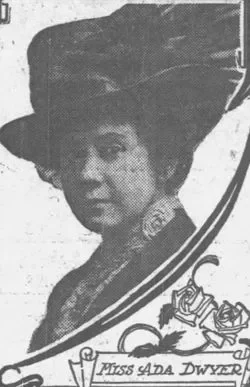
Ada Dwyer Russell: Actress and Literary Muse
Ada Dwyer Russell was born in Salt Lake City in 1863 to the Mormon family of James Dwyer and Sara Ann Hammer. She was introduced to the world of theater early in life: she attended many performances at the Salt Lake Theater throughout her childhood, and took the stage there for herself in 1882. Growing up, she eagerly took lessons from anyone who had something to teach her: “There was never a teacher of elocution, or any foreign language, that came to Utah in pioneer days, that my father did not have me take lessons from,” Ada wrote, reflecting on her training.
By 1890, Ada made her way to New York City, joining the cast of “One Error”. Following this, she went on to perform in “Alone in London” (1891) , “Don Juan” (1891), “Husband and Wife” (1892), “The Children of the Ghetto” (1892), “In a Balcony” (1900), “A Gentleman of France” (1902), “The Dawn of To-morrow” (1909), “The Deep Purple” (1911), and “Blackbirds” (1912). Alongside these performances in New York, she also performed on stages throughout England and Australia. In 1883, Ada married actor Harold Russell, castmate in “One Error”, and the two had a child soon after. However, they separated shortly following the birth of their child.
Until this point, Ada’s life followed a path that was very respectable and recognizable for her time. But everything changed in 1912 when she crossed paths with the writer Amy Lowell.
The two fell for each other quickly, and Ada became Amy’s muse. Retiring from the stage in 1914, Ada dove headfirst into a life with Amy, becoming her personal secretary, critic, and nurse all in one. Together, the two traveled across the United States and Europe, and the poetry that resulted from their time together captured their queer love without shying away from the prejudices of their time. Amy’s poems were later referred to as “the most explicit (as well as eloquent and elegant) lesbian love poetry to have been written between the time of Sappho and the 1970s” by critic Lillian Faderman. The two women were together until Amy’s passing in 1925. Following this, Ada served as Amy’s posthumous editor, publishing various collections that went on to win Amy Lowell a Pulitzer Prize for Poetry in 1926.
Ada Dwyer Russell’s connection to Utah came full circle in 1928, when the Salt Lake Theater staged its final performance. For its last hurrah, Ada was invited by the venue to perform as a special guest. She took to the stage to recite Amy Lowell’s poem “Lilacs”—a tribute to her late love, who had gifted her the lilac bushes that decorated the outside of her Salt Lake City home.
Lilacs in dooryards
Holding quiet conversations with an early moon;
Lilacs watching a deserted house
Settling sideways into the grass of an old road;
Lilacs, wind-beaten, staggering under a lopsided shock of bloom
Above a cellar dug into a hill.
You are everywhere.
You were everywhere.
It was a moment as powerful as it was devastating: Ada’s queer love spoken aloud in the space that had shaped her life from her very earliest days.
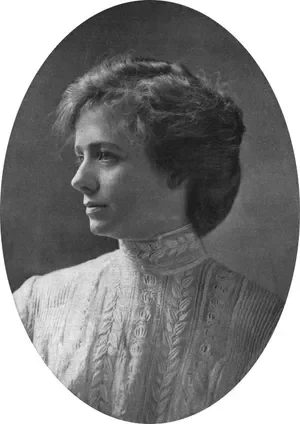
Maude Adams: From Salt Lake City to Neverland
If Ada Dwyer Russell’s story is one of subtlety and literary devotion, Maude Adams’s is one of pure spectacle. Born in Salt Lake City in 1872, Adams made her first stage appearance at just two months old in “The Lost Baby” at the Salt Lake City Theater.
She spent much of her early life traveling between California, New York, and Utah, where she acted in various stage productions, such as “Fritz, Our German Cousin", “A Celebrated Case”, and “Esmerelda”. She briefly returned to Utah for her studies, where she attended the Salt Lake Collegiate Institute, now known as Westminster University.
While she made her New York City debut at the age of ten in “Esmerelda”, her notable entry to the Broadway scene was in the 1889 production, “A Midnight Bell.” Between these early performances and when she retired from acting in 1916, she performed in 25 different Broadway productions. Of these, her most notable performance was as the titular role of J. M. Barrie’s “Peter Pan” in 1905. Originating this role on the Broadway stage, Maude stepped into the shoes of a character that has become the subject of much queer analysis and debate for years.
Maude went on to become the most well-known and financially successful Broadway actress of her time—making $1 million a year at her peak. Offstage, Maude cultivated an image of innocence and mystery. She was never seen in relationships with men, and was often described as private to the point of secrecy. Little did the public know: she was gay as hell! Maude was in two long-term relationships with women: first with Lillie Florence from the early 1890s to 1901, and then with Louise Boynton from 1905 to 1951.
Louise Boynton, a newspaper publisher and editor, became known to the public as Maude’s personal secretary. The Green Book Magazine noted in 1912 that wherever Adams went—her homes, her tours, travel abroad—Boynton was by her side: “Wherever she goes, she is attended by a secretary, a Miss Boynton, who has been in her service so long that she is virtually the actress’ companion. Whether at her country home in Long Island or her summer home in the mountains, whether traveling in foreign lands or on a professional tour of this country, Miss Boynton is by her side.”
When Maude died, she was buried right next to Louise—not a common arrangement for this time. But Maude was not one for sticking to the status quo. After all, Maude said it best herself: “If I have smashed the traditions it was because I knew no traditions.”
Utah’s Queer Legacies on the Stage
Neither Ada Dwyer Russell nor Maude Adams could live openly as queer women in their time. And yet, their stories are undeniably queer—marked by artistic devotion and love that endured despite social constraint. They remind us that queer history in Utah didn’t begin in the late 20th century. It’s been here all along—on our stages, in our theaters, and in the lilac bushes blooming quietly in someone’s yard.